
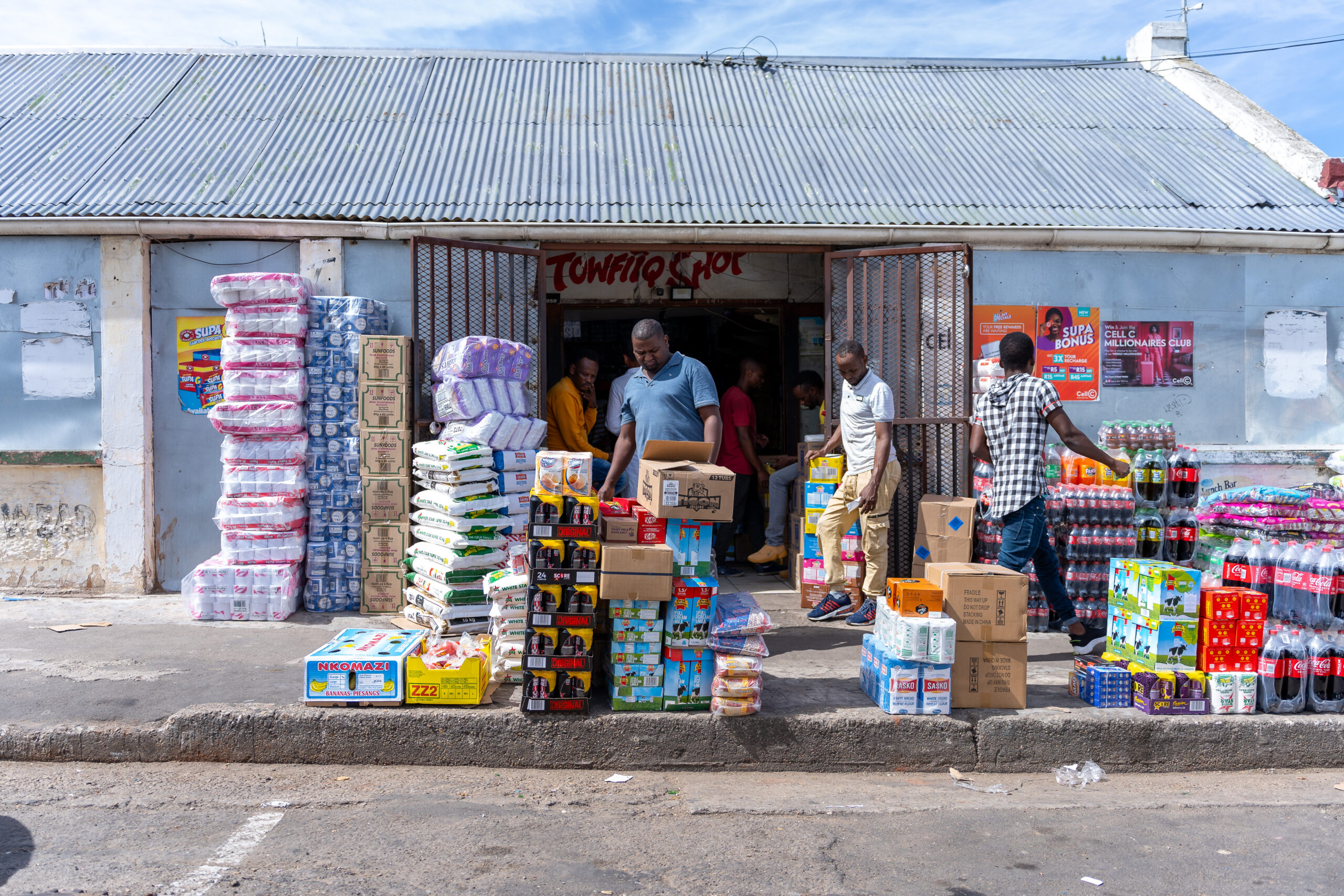
Traditional trade is a key economic driver in Africa, the Middle East, and Southeast Asia. In terms of the sheer number of retail outlets, as well as overall sales, this market is significant and should not be ignored.
By its very nature, traditional trade is difficult to measure. Many of these businesses are in informal settlements and have no formal physical address, or they may operate from tiny premises that double as the owner’s home. Some established traditional traders may have a hole-in-the-wall or kiosk or be transitioning into a more modern setup with larger premises, but the vast majority are still not listed on modern tools such as Google Maps.
Characteristics of Traditional Trade
Apart from their location and size, most traditional traders share several distinct characteristics.
They are typically owner or family-managed with a single outlet. Decision-making is immediate and done by the owner or head of the household. Merchandise is usually sourced from a local wholesaler, often collected personally by the trader.
Most transactions are in cash, and products are generally sold at the maximum retail price. Customers are either local community members or, if the outlet is near a transit point, passersby.
Product ranges tend to be broad but with small quantities of each item. Merchandising equipment is basic; simple or homemade shelving and, when coolers are present, they commonly store an assortment of products, sometimes including the trader’s own food and beverages.
Why Traditional Trade Matters
There are many reasons why companies should pay close attention to traditional trade.
Firstly, when a company has saturated the modern trade channels, traditional trade provides a substantial opportunity for new growth.
Secondly, traditional traders often progress into modern trade over time. Establishing loyalty early on can lead to long-term, mutually beneficial partnerships as these traders formalise and expand.
Similarly, customers of traditional trade evolve. A shopper introduced to a product while living in an informal settlement may retain their loyalty as they move into middle-class neighbourhoods and begin purchasing from modern supermarkets.
How to Enter and Succeed in Traditional Trade
Frontline Research Group (FRG) has been involved in traditional trade since the 1990s and is widely regarded as a specialist in this sector. Their expertise is supported by several unmatched capabilities:
- Decades of ongoing retail tracking:
FRG maintains long-running retail tracking panels for FMCG products across numerous African countries. This data stretches back many years, providing deep trend insights, historical context, and unrivalled visibility into market evolution. - Millions of geolocated outlets:
Over the past three decades, FRG has geolocated many millions of traditional trade outlets across Africa and the Middle East. This is an achievement unmatched by most research firms. This precise spatial data empowers clients to plan effectively, optimise route-to-market strategies, and identify hidden retail clusters. - Expansion into Southeast Asia:
Building on their African and Middle Eastern expertise, FRG is now actively operating in Southeast Asia, applying the same proven methodologies to another high-growth, traditional-trade-dominant region.
With this depth of experience and their extensive proprietary data assets, FRG has helped countless FMCG companies penetrate and grow within the traditional trade sector. They understand how these markets function, how purchasing behaviour shifts, and how brands can successfully navigate and win in this vital channel.
Contact Frontline Research Group
If you operate in Africa, Southeast Asia, the Middle East or any emerging market where General or Traditional Trade matters, contact Frontline Research Group today for a demonstration and discover how their expertise, data, and insights can help your company grow.
For more information contact Steve Johnson, Managing Director at Frontline Research Group on Tel: +230 5493 6376 or email: steve@frontlineresearchgroup.com or
Gareth Ellis, Regional Manager SE Asia, gareth.ellis@frontlineresearchgroup.com or Art Janse van Rensburg, Executive: New Business Sales, on Tel: +27 (0)71 889 9080 or email art@frontlineresearchgroup.com or
